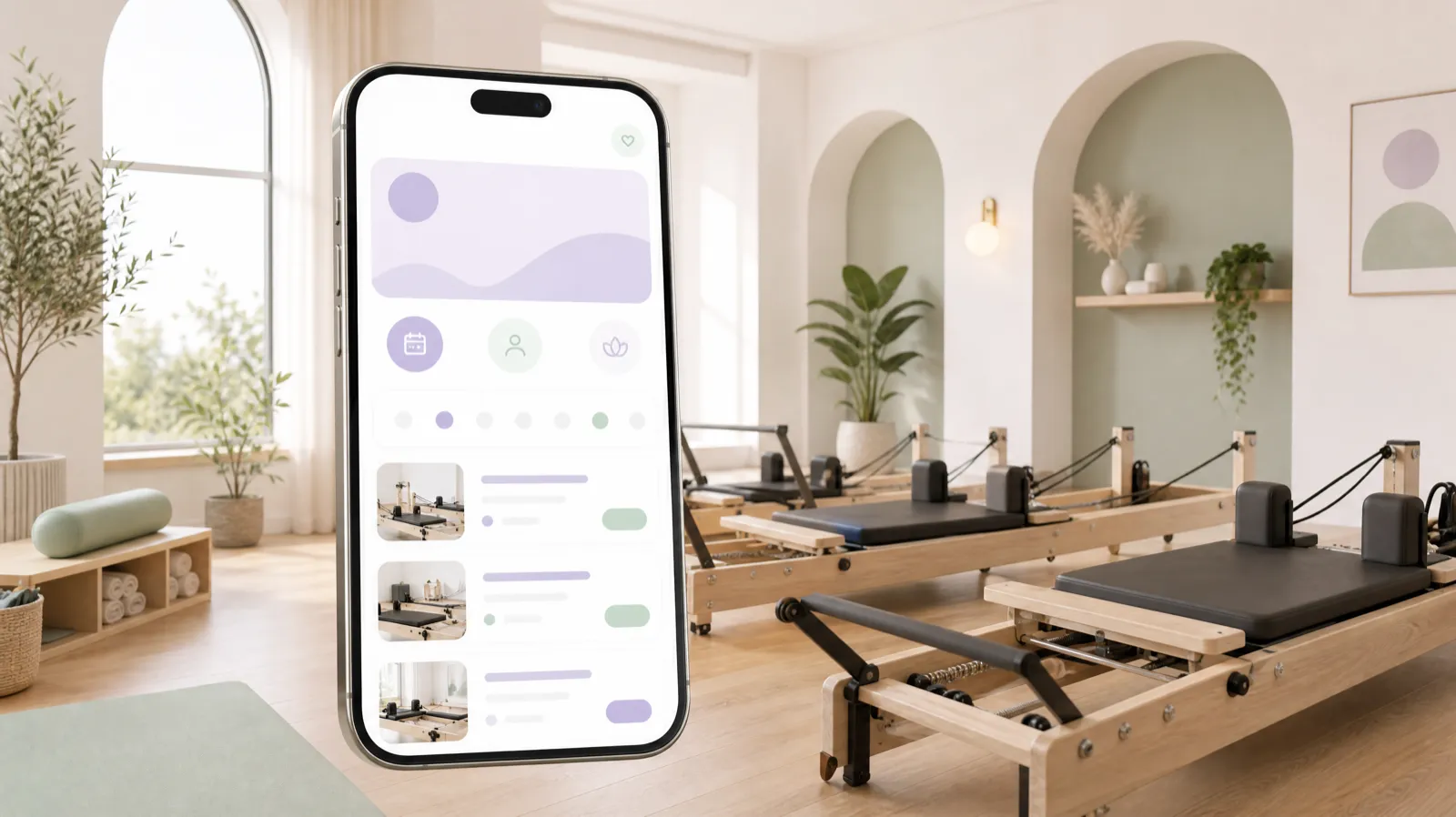
TL;DR: A Mindbody alternative is any studio platform that handles booking, payments, and client management without Mindbody's price tag or quote-based pricing. For Pilates studios, the strongest options in 2026 are Appyone (all-in-one with a built-in AI receptionist), Momence and Arketa (booking-first), and Vagaro (cheapest entry). Pick based on whether you want scheduling alone or scheduling plus lead follow-up and a phone that gets answered. Appyone starts at $97/month.
Most Pilates studio owners do not go looking for a Mindbody alternative because they woke up wanting to switch software. They go looking after a price increase email, or after a client complains that booking a class took four taps and a login reset, or after they realise ClassPass is quietly training their best regulars to pay less.
If any of that sounds familiar, you are in the right place. This guide compares the platforms Pilates studios actually move to, what each one costs, and the one feature almost none of them have. No filler, no ranking based on affiliate payouts. Just what works for a studio with a few reformers, a small team, and a phone that rings while you are teaching.
What Makes a Good Mindbody Alternative for a Pilates Studio?
A Pilates studio is not a big-box gym. You sell time on equipment, small classes, and a personal relationship with each client. That changes what your software needs to do.
Here is what actually matters when you switch, in the order most studios care about it:
- Clear pricing. You should see what you pay before you talk to anyone. Quote-based pricing wastes your time and usually means the number is high.
- Booking your clients will actually use. Reformer classes fill fast. If booking a spot is confusing, clients call you instead, and now you are back to answering the phone.
- Lead follow-up built in. A new person fills in your form on Sunday night. Do they get an instant reply, or do they wait until Monday afternoon and book somewhere else first?
- Someone to answer the phone. You are on the reformer with a client. The phone rings. That call is often a new booking or a rescheduling client. Missed, it becomes lost revenue.
- No long contract. You want to leave if it does not work, without a penalty.
- Fair payment processing. Watch the per-transaction fees. On hundreds of class payments a month, a small percentage adds up.
Keep that list in mind as we go through the options. The tools below all handle booking. Where they split apart is follow-up and answering the phone, and that is where most of your lost money hides.
The Best Mindbody Alternatives for Pilates Studios, Compared
Here is the short version before the detail. Prices are the published starting points as of 2026 and change often, so confirm the current number before you commit. "Quote" means you have to call to find out.
| Platform | Starting price (published) | AI phone receptionist | Lead follow-up built in | Contract | Best for |
|---|---|---|---|---|---|
| Appyone | $97/mo | Yes | Yes | Cancel anytime | Studios that want booking plus follow-up plus a phone that gets answered |
| Momence | From ~$40/mo + fees | No | Partial | Monthly | Booking-first studios that also sell on-demand video |
| Vagaro | From ~$30/mo | No | Basic | Monthly | Solo instructors and the tightest budgets |
| Arketa | From ~$99/mo | No | Partial | Monthly | Boutique studios wanting a modern booking experience |
| Glofox | Quote | No | Partial | Often annual | Multi-location boutique fitness |
| WellnessLiving | From ~$99/mo | No | Partial | Monthly/annual | Studios wanting an all-round Mindbody clone |
| Zen Planner | From ~$99/mo | No | Basic | Monthly | Studios that also run memberships and challenges |
| Mindbody | Quote (~$139/mo and up) | No | Partial | Often annual | Larger studios already locked into its marketplace |
Notice the second column. Every platform on this list schedules classes. Only one answers your phone. That gap is the whole reason this article exists, and we will come back to it.
Now the detail on each.
Appyone
Appyone is the all-in-one option built for service businesses, with a version shaped specifically for Pilates and boutique fitness studios. You get class and equipment scheduling, a client CRM, automated lead follow-up, Google review requests, and payments in one system, so you are not paying for and logging into five different apps.
The part that sets it apart is the AI receptionist built into the Pilates Studio plan. When a call comes in while you are teaching, or after 8pm when the studio is closed, the AI answers in a natural voice, books the caller into an available class, and texts them a confirmation. You wake up to booked classes instead of a list of missed calls you now have to chase.
Pricing is shown up front, which by itself makes it a relief after Mindbody. The Pilates Studio plan is $97 per month, with everything included: scheduling, CRM, AI receptionist, and automated follow-up. Annual billing gives you two months free. There is a one-time setup of $97 to $225 depending on how many trainers, rooms, and machines get mapped, and whether your data needs migrating from spreadsheets or from Mindbody itself.
Best for: studios that are tired of losing leads and calls, not just tired of their booking screen.
Watch out for: if all you want is a bare booking calendar and nothing else, the all-in-one setup is more than you need. It pays off once you care about follow-up.
Momence
Momence has grown fast with boutique studios, and for good reason. The booking flow is clean, it handles memberships and packages well, and it has strong tools for selling on-demand and livestream classes, which suits studios running a hybrid model.
Follow-up exists but leans on you to set up and maintain the automations. There is no AI answering your phone. Pricing starts low but watch the per-booking and payment fees, which are where the real cost lives once you are busy.
Best for: studios that sell a lot of video or livestream alongside in-person classes.
Watch out for: fees that scale with volume, and a feature set broad enough that smaller studios use only a slice of it.
Vagaro
Vagaro is the budget pick. A single user starts at around $30 per month, and you add features as you need them. It covers booking, payments, and a basic client record, and it has a consumer-facing marketplace where clients can find you.
It is genuinely cheap to start, which is why solo instructors like it. The tradeoff is that it feels built for salons and spas first, fitness second, and the follow-up and marketing tools are thin. No AI receptionist here either.
Best for: solo instructors and the tightest budgets.
Watch out for: add-on costs that creep up, and a client experience that is more salon than studio.
Arketa
Arketa is the newer, design-led option a lot of boutique studios are moving to. The booking experience looks modern on both web and mobile, it handles memberships and retreats, and studio owners tend to like how it presents their brand to clients.
It is booking-first with some marketing built in. Like the others, it does not answer your phone, and lead follow-up is more manual than automatic.
Best for: studios that care about how their booking page looks and feels.
Watch out for: a younger product, so a few edges are still being polished, and pricing that climbs with add-ons.
Glofox
Glofox targets boutique fitness and multi-location operators. It is capable for studios running memberships at scale, with a branded client app and solid reporting.
Pricing is quote-based, which puts it in the same frustrating bucket as Mindbody. Contracts often run annually. For a single-location Pilates studio it can be more platform, and more commitment, than you need.
Best for: multi-location boutique fitness chains.
Watch out for: the sales call to get a price, and annual terms.
WellnessLiving
WellnessLiving is the closest thing to a like-for-like Mindbody replacement. It does almost everything Mindbody does, often at a lower price, with booking, memberships, marketing, and a client app. Studios switching straight off Mindbody find it familiar.
It is a lot of software. That breadth is the appeal and the drawback: powerful, but with a learning curve, and still no AI answering your phone.
Best for: studios that want everything Mindbody had, cheaper, with minimal relearning.
Watch out for: the sheer number of settings, and time spent configuring it.
Zen Planner
Zen Planner comes from the gym and martial-arts world and has moved into boutique fitness. It is strong on memberships, retention tracking, and challenges, which suits studios that run programs rather than just drop-in classes.
The interface is functional over pretty, follow-up is basic, and, again, no phone coverage.
Best for: studios running membership programs and challenges.
Watch out for: a dated feel and thin lead-capture tools.
Why Are Pilates Studios Leaving Mindbody?
Mindbody is not a bad product. It is a big one, built for scale, and that is exactly the problem for a small studio. Here is what pushes owners to look elsewhere.
Price, and the way you find it out. Mindbody does not publish clear pricing. You book a call, sit through a demo, and get a number that tends to start around $139 per month and climbs into the several hundreds for the tiers with the useful features. Then come the payment processing fees on top. For a studio with two reformers and a part-time front desk, that is a heavy monthly line.
Price increases. Existing customers regularly report their monthly cost going up. When you are already paying more than you would like, a hike is often the moment you start searching for alternatives.
The booking experience. Clients complain about the app: logins that expire, a marketplace that surfaces other studios next to yours, and extra taps to book a simple class. Every point of friction is a client who calls you instead, which puts the work back on you.
ClassPass. Mindbody owns ClassPass. That connection can fill empty spots, but it can also quietly move your loyal regulars onto cheaper third-party passes, so you earn less from the same clients you already had.
It still does not answer your phone. For all its size, Mindbody does not pick up when you are mid-session. The missed call, the after-hours enquiry, the reschedule request, those still fall on you or your front desk. That is not a Mindbody-specific failing, but at Mindbody prices it stings more.
Which Mindbody Alternative Is the Cheapest?
If the only question is lowest sticker price, Vagaro wins, starting around $30 per month for one user. Momence has a low entry tier too, though per-booking fees mean the real cost depends on how busy you are.
But cheapest by sticker is the wrong way to choose. The number that matters is total cost after you add payment fees, add-ons, and the revenue you lose from missed calls and slow follow-up. A platform that costs $30 a month and lets three new-client calls a week go to voicemail is not cheap. It is expensive in a way that does not show up on the invoice.
Run the math on your own studio. One recovered no-show, or one new client a month who would otherwise have booked elsewhere, usually covers the difference between the budget pick and a platform that follows up and answers the phone. Appyone's Pilates Studio plan starts at $97 per month with the price shown before you talk to anyone, with the AI receptionist included — the feature that turns those missed calls into booked classes.
The Real Cost of a Missed Call at a Pilates Studio
Put a number on the phone gap, because it changes how you read the price table above.
Say your average client is worth $60 a month and stays six months. That one client is worth $360 over their time with you. Now say your phone rings four times a week while you are teaching, and one of those calls is a genuine new enquiry. Miss it, and they ring the studio down the road that picks up.
Even if only one missed call a month turns into a lost client, that is a full client's lifetime value gone, every month, against software that costs a fraction of it. Over a year, the calls nobody answered quietly cost more than any platform on this list.
This is why the cheapest sticker price misleads. A budget tool that saves you a little on subscription can lose you many times that in calls that went to voicemail. An AI receptionist that books the caller while you stay on the reformer is not a nice extra. For a studio run by one or two people, it is the feature that pays for the whole system.
Red Flags to Avoid When Choosing Pilates Studio Software
A few warning signs separate the platforms worth your time from the ones you will regret signing up for.
- Pricing you can only get on a sales call. If a company hides the number, the number is usually high.
- Long lock-in contracts with an early-exit penalty. Month-to-month billing keeps the software honest, because they have to earn the next month.
- Payment processing fees buried in the fine print. On hundreds of class payments, a single percentage point adds up to real money.
- A booking flow that needs a client login and a password reset. Every extra tap sends a client to your phone instead of the calendar.
- No automatic follow-up. If the tool captures an enquiry but does nothing with it, you are still the follow-up system, at 9pm, from memory.
- Setup measured in weeks with no help. You should be live in days, with someone migrating your data for you, not left alone with a CSV file.
Score each option against that list. The tools that fail three or more are the ones you will be replacing again in a year.
How to Switch From Mindbody Without Losing Your Data
The fear that keeps studios stuck is losing years of client history. You will not. Here is the path.
- Export from Mindbody. Pull your client list, class and attendance history, and membership and package data as CSV files from your Mindbody account.
- Pick your platform and import. Every alternative here accepts a client import. Check that memberships and remaining package credits come across, not just names and emails.
- Run both in parallel for a week. Keep Mindbody live while you set up the new system and confirm bookings, payments, and reminders all fire correctly.
- Tell your clients once, clearly. A single message with the new booking link and a short "here is what is changing" note prevents confusion.
- Cancel Mindbody after the overlap. Watch your contract terms so you do not pay for a month you are not using.
With Appyone, steps 1 to 3 are handled for you. The team maps and migrates your existing data during the one-time setup, so you move over with your history intact rather than starting from an empty system.
Frequently Asked Questions
What is the best Mindbody alternative for a Pilates studio? For a small or boutique Pilates studio, the best alternative is the one that books classes, follows up with leads, and answers the phone when you are teaching. Appyone does all three with a built-in AI receptionist in the Pilates Studio plan. Momence and Arketa are strong booking-first picks, and Vagaro is the cheapest entry point.
Why are Pilates studios leaving Mindbody? Price increases on plans that already cost more than most small studios want to pay, a booking experience clients find clunky, and the ClassPass relationship that can pull regulars onto cheaper passes. Studios also dislike that pricing is quote-based, so you cannot see the cost without a sales call.
Which Mindbody alternative is the cheapest? Vagaro has the lowest published starting price, from around $30 per month for a single user. Momence has a low entry tier with per-booking fees. Appyone's Pilates Studio plan starts at $97 per month with pricing shown up front.
Can I move my client data from Mindbody to another platform? Yes. Export your client list, class history, and membership data from Mindbody as CSV files, and most alternatives import them. Appyone maps and migrates your data as part of the one-time setup.
Does Appyone include an AI receptionist that Mindbody does not? Yes. The Pilates Studio plan includes an AI voice receptionist that answers calls when your front desk is teaching or closed, books the caller into a class, and texts a confirmation. Mindbody does not answer your phone for you.
The Bottom Line
Every platform here will schedule your classes. That part is solved. The question that decides your revenue is what happens to the lead who fills in your form at 9pm and the client who calls while you are on the reformer.
Most Mindbody alternatives leave both to you. Appyone answers the phone, books the class, and follows up, so the studio keeps running when you cannot get to it. If you are switching anyway, switch to the one that closes the leaks, not just the one with a nicer booking screen.
→ See Appyone for your Pilates studio, book a free demo →
Pricing shown up front. Cancel anytime. Your client data always belongs to you.